Kis Kisko Pyaar Karoon 2 (2025) REVIEW ft. Jamie, Manjot, and Kapil

After staying away from films for a while, Kapil Sharma returns with Kis Kisko Pyaar Karoon 2, and honestly, it’s exactly what you’d expect. The film brings back the chaos of a man caught between multiple wives, this time directed by Anukalp Goswami. The cast includes Manjot Singh, Hira Warina, Tridha Choudhury, Parul Gulati, and Jamie Lever.
The sequel hit screens on December 12, 2025, following up on the 2015 original that introduced Kapil to Bollywood audiences. Running over two hours, the film also features Asrani in what turned out to be his last screen role. It’s backed by Venus Worldwide Entertainment and aims squarely at families looking for simple laughs.

What Happens in the Story
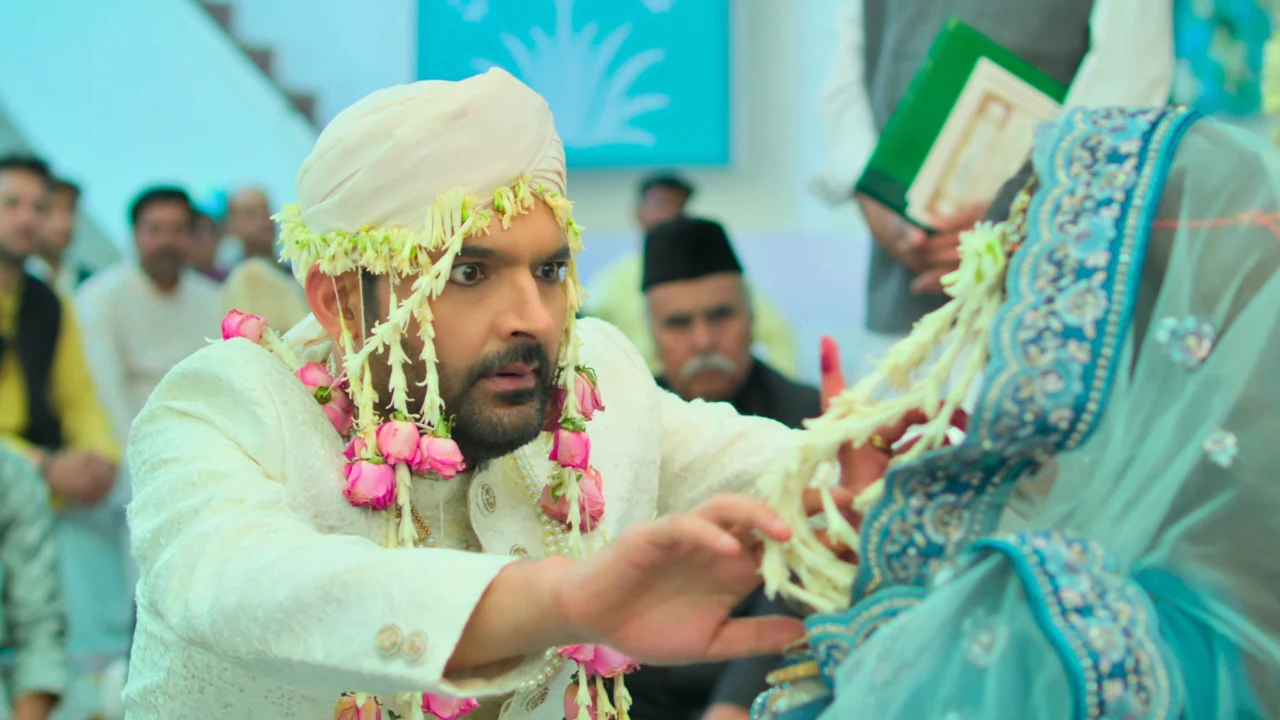
Mohan loves Sanya, but their families aren’t having it because of religious differences. To get past this, Mohan decides to convert and take on a new name, Mehboob. Simple enough, right? Wrong.
Things get complicated when Mohan somehow ends up with three wives, each from a different religion. He’s running three separate lives with three different names. Add a cop who’s hunting for someone married to multiple women, and you’ve got your setup.
The film starts with Mohan literally running away from trouble on railway tracks. From there, we go back to see how he got into this mess, all set in Bhopal.
How the Actors Do
Kapil carries the whole thing. That’s the bottom line. His comedy timing hasn’t gone anywhere—he switches between being three different husbands and somehow makes it work. You never feel like you’re watching someone struggle with the role.
Manjot Singh plays Mohan’s best friend Hubby, and I found their scenes together genuinely enjoyable. There’s an easy chemistry there that doesn’t feel rehearsed. When comedy depends on two people playing off each other, this kind of natural flow matters.
Tridha Choudhury gets more to do than the other female leads. She makes an impression with what she’s given. Parul Gulati and Hira Warina both turn in good work, though I wish their characters had more layers to them.
The side characters deserve mention. Asrani playing a church priest brings both laughs and a bit of sadness knowing this was his final role. Sushant Singh as the cop and Jamie Lever as an activist all contribute. The film doesn’t drop the ball when Kapil’s not in frame, which says something.
The Good Stuff
Here’s what I appreciated most—this is a genuinely family-safe comedy. You’re not going to hit any moments where you’re uncomfortable watching with your parents or kids. In 2025, that’s actually noteworthy.
The jokes work more than they don’t. When your entire film hangs on situational comedy about religious and marital confusion, getting the tone right matters. They manage to poke fun at cultural differences without being disrespectful, which isn’t easy.
I expected the film to drag in the second half. Most comedies do. But this one keeps its pace up. The laughs don’t disappear after interval, which is crucial for a film like this.
Kapil’s in his element here. You can tell he understands this kind of comedy inside and out. Even basic scenes get lifted because he knows how to deliver. The direction stays simple and gets out of the way, which is smart.
Where It Stumbles
The songs are a problem. They don’t add anything and actively slow things down. The music itself isn’t memorable, and the placement feels obligatory rather than organic. Cut them out, and the film would flow better.
Some story choices don’t track. Sanya disappears and her parents just… don’t care? Mohan is absent from each home for huge chunks of time and none of his wives wonder where he is? Even accepting this is a comedy that bends reality, these gaps pull you out of the experience.
The writing needed another pass. While the overall story entertains, specific moments feel underdeveloped. Sometimes the film pushes the absurdity past the point where it’s funny into territory where it’s just confusing.
You can see everything coming. If you’ve watched Hindi comedies from the 90s, nothing here will surprise you. The ending wraps up exactly how you’d guess. Some unpredictability would’ve helped keep things interesting throughout.
The wives don’t get enough development as characters. The actresses do fine work, but their roles exist mainly to create comedy situations. They’re defined by which religion they follow rather than who they are as people. More depth would’ve made the emotional payoffs stronger.
Professional Takes
Critics landed in different places on this one. Bollywood Hungama gave it 3.5 out of 5, saying it brings back memories of older madcap comedies while staying clean. They liked Kapil’s work but called out the weak music.
Koimoi matched that 3.5 rating, noting the film delivers what it sets out to—chaos and comedy. The Philox went much higher at 4.5 out of 5, positioning it as one of the better Hindi comedies recently. India Tribune gave it 4 out of 5, calling it right for families during holiday season.
On social media, reactions split hard. Some viewers came out of early shows calling it a blockbuster experience, giving it top ratings. Others used words like “disaster” and “outdated,” saying the jokes felt recycled.
The gap seems to be between Kapil’s existing fans, who know what they’re getting and enjoy it, versus general audiences looking for something fresher. The film’s release alongside bigger titles has also affected its visibility.
What Regular Viewers Think
Public response has been all over the map. People who rushed to first shows shared excited reactions online. They got their Kapil fix and felt satisfied—this is his comedy style translated to cinema.
On the flip side, harsh reviews called it unnecessary. Several people said that beyond a handful of Kapil’s jokes, they found little to enjoy. The term “outdated” kept appearing, suggesting this comedy approach doesn’t connect with everyone in 2025.
Plenty of middle-ground responses exist too. These viewers found it a perfectly fine way to spend two hours. They laughed at points, acknowledged where it dragged, but didn’t regret buying tickets.
Families looking specifically for clean content seemed happiest. Parents commented on being able to watch without worrying about what their kids would see. For that audience, the film’s old-school approach worked as a feature, not a bug.
Asrani’s presence got universal respect. Even people who disliked the film overall acknowledged his contribution and felt the weight of it being his last appearance. His scenes get cited as among the best in the film.
My Take on It All
This film understands its lane and stays in it. It’s reaching back to an earlier era of Hindi comedy and trying to recapture that feeling. It doesn’t attempt anything groundbreaking or make grand statements.
Kapil demonstrates again why he’s successful at comedy. His performance anchors everything. The supporting actors don’t just fill space—they contribute real moments. If you’ve enjoyed Kapil’s television work, you’ll probably find this satisfying.
It works when you adjust expectations. Think of it as comfort viewing rather than innovative cinema. The clean approach makes it accessible to everyone, which feels increasingly rare in Bollywood.
But if the premise of the original film didn’t work for you, this won’t change your mind. It’s doubling down on the same approach rather than evolving. The music problems and story gaps keep it from reaching its potential.
In the current environment where comedies are scarce and family options even more so, this fills a gap. It’s not going to be remembered as essential cinema, but it achieves what it aims for—making audiences laugh without making them think too hard.
Rating: 3.5/5