

Raju weds Rambai (2025) REVIEW: When Village Love Meets a Shocking Reality

A wedding band player falls for a college girl in a small Telangana village. What starts as innocent romance turns into a battle against family pride and social rigidity. Released on November 21, 2025, this Telugu drama from first-time director Saailu Kaampati brings a story rooted in reality.
Produced by Venu Udugula and Rahul Mopidevi, the film stars fresh faces Akhil Raj Uddemari and Tejaswi Rao in lead roles. Music comes from Suresh Bobbili, while Wajid Baig handles the camera. At 2 hours 15 minutes, it takes us back to 2010 in a village where love meets harsh tradition.
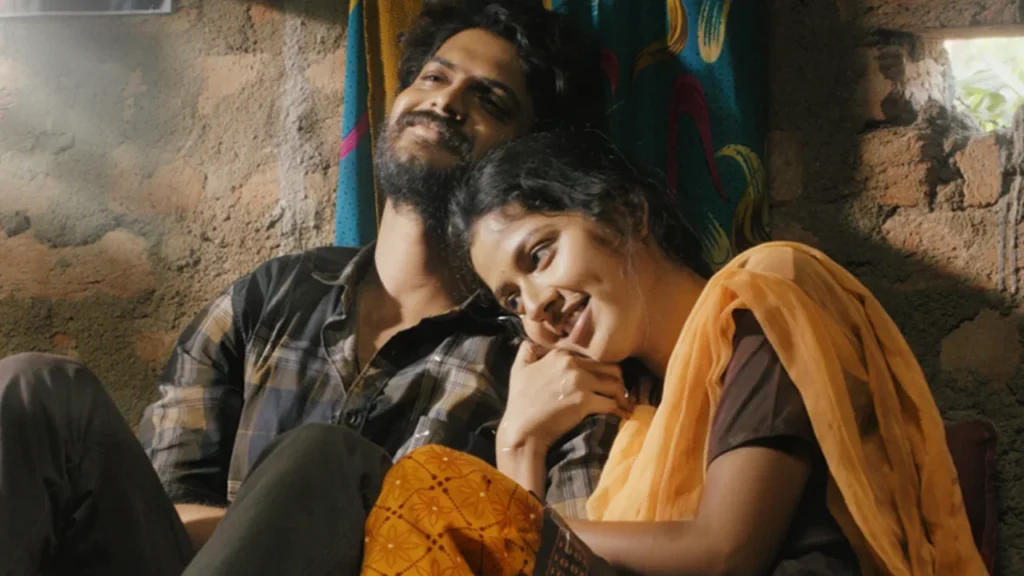
When Love Meets Stubborn Pride
Raju makes his living playing drums at weddings. His father dreams of bigger things for him, maybe a job in the city. But Raju has other plans. He’s fallen for Rambai, who studies in the nearby college. Their relationship grows quietly at first.
The opening portions establish the village world convincingly. The romance builds through small moments rather than grand gestures. As family opposition grows, the couple must decide how far they’ll go. The story moves predictably for much of its length before delivering a final act that catches you off guard. Based on actual events from the Khammam-Warangal region, the ending goes to a dark place most commercial films avoid.

Fresh Faces Bring Honest Effort
Akhil Raj Uddemari steps into films with this role. He brings natural ease to Raju, especially in scenes showing his love for music and village life. The character feels authentic rather than manufactured. When heavier scenes arrive, his limited experience becomes visible. I noticed he struggles to convey deeper anguish, particularly during the film’s most demanding moments.
Tejaswi Rao as Rambai captures the character’s inner conflict well. She shows genuine emotion when facing her father’s wrath and society’s judgment. Like her co-star, she handles everyday scenes better than peak dramatic ones. Their pairing works to establish believable affection, though uneven writing sometimes breaks that spell.
Shivaji Raja appears briefly as Raju’s worried father, lending veteran weight. Anitha Chowdary and Kavitha Srirangam fill supporting roles that help build the village atmosphere. Raju’s friends provide comic moments that land occasionally, breaking up the heavier tone.
The Film Gets Key Elements Right
The village recreation feels lived-in rather than staged. Cinematographer Wajid Baig captures the dusty roads, simple homes, and open fields that define rural life. The production team clearly spent time getting details right. You can almost feel the heat and hear the morning sounds.
Suresh Bobbili’s soundtrack proved popular before release. The song “Rambai Neemeedha Naku” went viral online, sung by Anurag Kulkarni and Jayashree Pallem. The melody fits the romantic mood perfectly. His background music adds emotional weight when needed, though it occasionally oversells moments.
The performances stay grounded throughout. Nobody overacts or goes theatrical. This suits material meant to feel real. The film tackles serious social problems—overbearing parents, forced marriage, the way caste and status poison relationships. Because it’s based on true events, these issues carry extra weight.
Where the Film Stumbles
The pacing falters badly in the middle hour. After setting up the conflict, the story circles the same territory repeatedly. Scenes of arguing, crying, and running away start blending together. At 135 minutes, cutting 15-20 minutes would’ve helped. The editing doesn’t maintain momentum.
The opening half follows too-familiar patterns. Boy likes girl, they romance secretly, family discovers them. We’ve walked this path in countless rural dramas. Raju himself lacks standout traits. He’s nice and loves Rambai, but that’s about it. I wanted more specific details that would make him memorable beyond just being the protagonist.
Character development stays surface-level for most roles. Venkanna’s disability gets mentioned but never explored meaningfully. His wife suffers his temper but remains underdeveloped. The screenplay treats people as types rather than individuals with full inner lives.
Some scenes troubled me, particularly those showing physical violence between lovers and domestic abuse within Rambai’s family. The film presents these without adequate commentary or consequence. I worry audiences might interpret the silence as acceptance rather than criticism of these behaviors.
Mixed Critical Response, Decent Public Interest
Professional critics split on the film. IMDb users gave it 7.5/10, showing solid appreciation. 123Telugu awarded 3 out of 5 stars, specifically praising the ending and music while noting emotional flatness elsewhere. GreatAndhra went with 2.5/5, calling the narration uneven despite the strong finish.
Telugu360 matched that 2.5/5 rating, appreciating the bold climax but finding the emotional core lacking. TrackTollywood acknowledged honest work from the cast and the striking conclusion while identifying familiar territory and weak stretches. Cinejosh settled on 2.5/5, recognizing raw emotion and powerful ending but pointing to repetitive execution.
Audiences have shown cautious interest. The film opened with 44% theater occupancy on day one, particularly strong in Warangal. Younger viewers connected more readily with the village romance and social themes. Social media saw praise for the gutsy ending and lead pair’s chemistry, balanced against complaints about slow movement. The pre-release viral song definitely helped draw people in.
A Story Worth Experiencing Despite Flaws
This film represents honest work from a first-time filmmaker taking on difficult material. Saailu Kaampati deserves recognition for not taking the easy path. The story’s real-life roots add weight to every scene. The shocking conclusion delivers genuine impact and stays with you long after leaving the theater.
The newcomer actors show potential worth nurturing. Neither Akhil nor Tejaswi embarrasses themselves, and both have room to grow. The authentic village atmosphere, memorable music, and Chaitu’s commanding performance add genuine value. If you can tolerate pacing problems and familiar tropes, the emotional gut-punch at the end makes the journey worthwhile.
I appreciate films that tackle uncomfortable truths about our society. This one does that, even if imperfectly. The climax alone separates it from standard romantic dramas. For viewers seeking substance over style, and willing to forgive rough edges, it offers a haunting meditation on the price of pride.
Rating: 3/5